Newsletter Archives
May 7, 2026 — 18 Lessons from 18 Extra Years
Eighteen years ago, a liver transplant saved my life. Fewer than half of recipients make it this far. Here are the lessons that hit me hardest — on time, perspective, and what it means to live intentionally.
Take Two
No one should settle for a half-lived life.
This week, I celebrated a milestone I don't take lightly.
Eighteen years ago, I received a liver transplant that saved my life.
Fewer than half of transplant recipients make it this far. That reality is never far from my mind. Every day feels like borrowed time—and a gift.
Over these years, I've watched my kids grow up. I've shared life with Vicky, traveled across the country and around the world, collected wonderful experiences, and formed friendships with thoughtful, remarkable people.
But more than anything, I've paid attention.
Because when you know life is fragile, you stop assuming you have time—and start paying attention to the time you actually have.
Looking back, I wrote down 18 lessons—one for each extra year I've been given. Here are the ones that hit me hardest.
Perspective must be chosen daily. I thought surviving would permanently change how I saw the world. It didn't. The first time I got back behind the wheel in traffic, I realized perspective doesn't stick—it fades. You don't get to live off yesterday's gratitude. You have to choose it again, every morning.
Time is life in disguise. It's easy to lose hours to screens and distraction. But those hours aren't neutral—they are your life. As Bruce Lee said: "If you love life, don't waste time, for time is what life is made of."
Think about death. It might be the most life-giving thing you do. Most people avoid the subject entirely. I think about it every day. Not morbidly, but mindfully—aware that I'm living in extra innings, and that I don't know how many I have left. That awareness makes me intentional.
My health history draws me there, but honestly? None of us is promised tomorrow. We're all in overtime—most people just don't choose to think about it.
What would change for you if you actually believed that?
There are 15 more lessons in the full article—on relationships, regret, kindness, worry, and why the simple moments are often the richest ones.
I end most days with a question from Mary Oliver: "Tell me, what is it you plan to do with your one wild and precious life?"
Eighteen extra years have taught me one thing above all else: life is not something to manage. It's something to live—intentionally and fully and beautifully.
Make it a masterpiece.
IDEAS WORTH THINKING ABOUT
On average, we hear around 30,000 words a day. That's roughly 11 million words a year.
Of the millions of words that washed over you last year, which ones do you actually remember?
Probably not the neutral ones.
Research in behavioral economics has long established that negative experiences hit harder than positive ones of equal size. Daniel Kahneman and Amos Tversky's landmark Prospect Theory put a number on it: the pain of a loss is psychologically about twice as powerful as the pleasure of an equivalent gain. Applied to word—a discouraging remark, a cutting criticism, an offhand insult—we feel the sting roughly twice as deeply as we feel the warmth of a compliment of the same weight. It's why one critical comment can linger for days after a dozen kind ones have already faded.
This isn't weakness. It's wiring.
But here's what that means practically: to simply stay even (emotionally, relationally, mentally) we need to hear approximately twice as many positive words as negative ones just to break even. Most of us aren't anywhere close to that ratio.
If you want to elevate your life—your marriage, your relationships, your mental health—start by elevating the words you hear. Be more intentional about the voices, the content, and the conversations you let in. And be more generous with the words you give to others.
Words aren't just words. At scale, they shape who we become.
THE EXTRAORDINARY LIFE LIBRARY
The Extraordinary Life Life Library is a section of my website where I highlight books that have shaped my thinking—on purpose, personal development, money, and living well. Several of the book recommendations include my top 10 takeaways and excerpts.
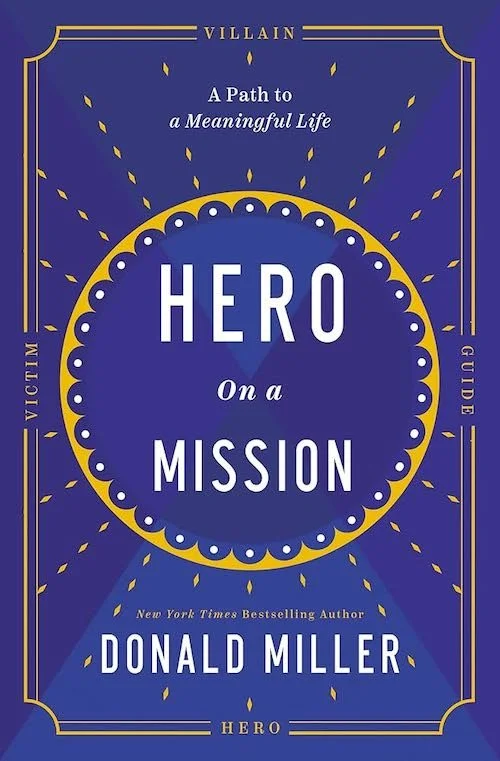
A book full of great insights and reminders is Hero on a Mission by Donald Miller.
BEFORE YOU GO
Three ideas in this week's newsletter—and at their core, they share a common idea.
The words we let in shape how we see the world. The books we read shape how we think about it. And the way we spend our days—our time, our attention, our conversations—shapes the life we actually live.
Eighteen years of borrowed time has taught me that none of it is accidental. The people who live well aren't just lucky. They're intentional.
I hope something this week gave you a reason to pause, to notice, or to choose a little more deliberately.
Stay inspired by the life you're living.
Kevin
Apr 23, 2026 — The Slow Strangulation of the Mind
What do isolated Tasmanian tribes and the Vanderbilt fortune have in common? Two stories — separated by millennia — with the same quiet warning about what we lose when we stop engaging with the world.
Take Two
No one should settle for a half-lived life.
WORDS TO WONDER
“No man is an island, entire of itself; every man is a piece of the continent, a part of the main.”
— John Donne, English poet and cleric (1572–1631)
PERSPECTIVES TO PONDER
Around 10,000 years ago, rising seas filled the Bass Strait and cut Tasmania off from mainland Australia.
What followed is one of history's quietest—and most unsettling—lessons.
The Tasmanians didn't just stop progressing.
They regressed.
Over generations, they lost technologies their ancestors had once possessed. Bone tools. Fish hooks. Barbed spears. Warm clothing. Not through war or famine—just slow, steady loss. When the last person who knew a skill died, the skill died with them.
An anthropologist later called it "the slow strangulation of the mind."
Not because the people lacked intelligence. But because they lacked connection.
Contrast that with Tierra del Fuego—an island equally harsh and remote. Those people still developed complex tools and clothing. Why? They had occasional contact with outsiders. As Matt Ridley writes in The Rational Optimist, that was enough. All it took was an occasional incomer to keep technology from regressing.
Occasional contact. That's all it took.
Now fast forward to today.
We've never been more connected—and yet many of us are quietly isolating ourselves. Not geographically, but mentally, socially, intellectually.
We curate our lives until we're surrounded by people who think like us, agree with us, and reinforce what we already believe.
It feels like community. But sometimes, it functions like Tasmania.
Because growth doesn't come from sameness. It comes from exposure. From friction. From conversations that stretch us. When we stop encountering difference, we don't stay the same—we slowly simplify. Our thinking narrows. Our curiosity fades.
The Tasmanians didn't know they were losing anything. Each generation inherited a slightly smaller world, and it felt completely normal.
That's how regression works. Quietly.
So here's something worth asking:
Where have you isolated yourself?
Maybe physically. Maybe intellectually—only consuming ideas that confirm what you already think. Maybe relationally—staying where it's comfortable instead of where it's stretching.
The people who keep growing aren't always the smartest. They're the most connected. They stay open, curious, and in conversation with the world beyond themselves.
The mind that stays connected keeps growing.
The one that closes off...regresses.
THE COST OF INHERITED COMFORT

The Biltmore Estate
On our quest to visit all 50 states, my family and I found ourselves in North Carolina last week—walking through the halls of the Biltmore Estate in Asheville, the largest private residence ever built in the United States.
It’s breathtaking.
Room after room of craftsmanship, scale, and excess—built by George Vanderbilt, heir to one of the greatest fortunes in American history.
At one point, the Vanderbilt name was synonymous with wealth. Cornelius Vanderbilt built a fortune so vast it seemed impossible to lose. His descendants would be set for life. And then some.
But there was a philosophy attached to that wealth.
It wasn’t just to have it. It was to show it.
To live lavishly. To signal status. To play the part of being extraordinarily rich.
And for a time, they did.
But by 1973, when the family gathered for a reunion, there wasn't a single millionaire among them.
Not through a single collapse—but through a pattern.
Spending without building. Display without discipline. Comfort without contribution.
It’s easy to look at a story like this and think it’s about money.
It’s not.
It’s about what happens when we stop producing—when we treat what we’ve been given as something to live off instead of something to build from.
We all inherit something.
Opportunity. Skills. Relationships. A reputation earned over years.
And like the Vanderbilts, we have a choice.
The danger of comfort is that it quietly convinces us we no longer need to strive. That what we have is enough to carry us forward.
But what we don’t actively tend, we slowly lose.
The Vanderbilt fortune didn’t disappear overnight.
It faded.
Gradually.
Almost imperceptibly.
Until what once seemed endless… had simply slipped away.
Comfort is a destination. The Vanderbilts got there.
BEFORE YOU GO
Two very different stories this week. One from 10,000 years ago. One from last week. Same lesson.
The Tasmanians lost what they had through isolation. The Vanderbilts lost what they had through comfort.
The question for the rest of us is the same:
What are we doing with what we’ve been given?
Growth has never been accidental. It requires contact, intention, and a willingness to be stretched.
This week—choose one, and lean in.
Stay inspired by the life you're living.
Kevin
Apr 9, 2026 — Stealing Moments and The Magic of the Space Between
Most people treat waiting as wasted time.
But what if the moments in between—the sideline, the pause, the quiet gaps in your day—are where everything that matters is actually happening?
From an unexpected scene during an NFL playoff game to a forgotten book that took 16 years to be discovered, this issue explores a powerful truth: the way you use the in-between moments shapes everything that follows.
Take Two
No one should settle for a half-lived life.
WORDS TO WONDER
"You have power over your mind—not outside events. Realize this, and you will find strength."
— Marcus Aurelius, Roman Emperor and Stoic philosopher (121–180 AD)
PERSPECTIVES TO PONDER
During an NFL playoff game in January 2025, cameras caught something no one expected.
Philadelphia Eagles wide receiver A.J. Brown was on the sidelines—and he was reading a book.
Not scrolling. Not pacing. Not hyping himself up.
Reading.
The commentators were stunned. As the camera zoomed in, the title came into focus: Inner Excellence—a book about mastering your mindset.
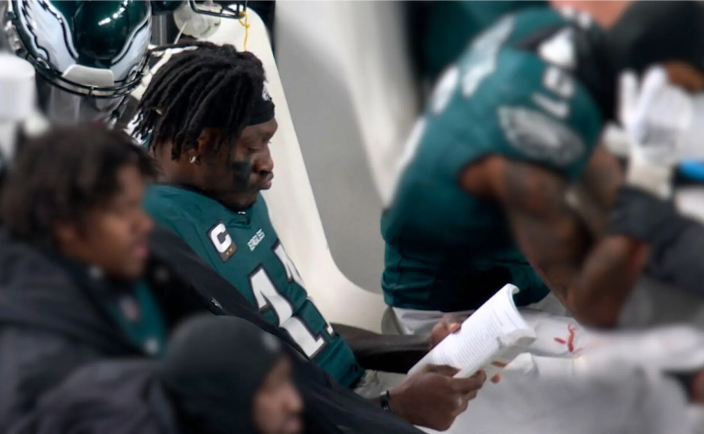
A.J. Brown reading Inner Excellence on the sideline
In the middle of one of the highest-pressure environments in professional sports.
It would be easy to dismiss as strange.
But look closer, and it reveals something worth thinking about.
When A.J. Brown stepped onto the field, he competed fully. But when he stepped off it, he didn't switch off—he simply shifted. From performing to preparing. From output to input.
He understood something Marcus Aurelius understood two thousand years ago:
The outer game is always downstream of the inner one.
You can't control the defense. You can't control the crowd, the calls, or the moment the ball comes your way. But you can control what's happening in your mind—how you think, what you focus on, how you respond.
That's not a small thing. That is the thing.
This hit close to home for me.
I'm a fast-paced person. Waiting has never been a strong suit. Doctors' offices, the DMV—the wait was torture. I'd feel frustration building with every passing minute, as if the time were being stolen from me.
Then someone offered a simple suggestion: bring a book everywhere you go.
It changed everything.
Suddenly, the wait wasn't wasted time. It was reading time. The places I dreaded became the places I actually looked forward to—because I knew I'd get uninterrupted pages. With the Kindle app on my phone, I now carry an entire library in my pocket. What used to feel like time being taken from me became time I was quietly grateful for.
A.J. Brown figured out the same thing—just on a bigger stage.
The sideline wasn't downtime. It was an opportunity. The in-between moment was the preparation.
Most of us treat the gaps in our day as interruptions. The commute. The wait. The quiet Tuesday afternoon. But those gaps are always something—the only question is whether we choose what they become.
Marcus Aurelius didn't write his Meditations for publication. He wrote them for himself—daily mental training in the margins of running an empire. No cameras. No crowd. Just a man, doing the inner work, in the in-between moments.
The sideline is never just the sideline. The wait is never just the wait. The in-between is where it happens—if you choose to show up for it.
The next time life makes you wait—don't kill time. Steal it.
ONE QUESTION WORTH SITTING WITH
Are you someone who kills time—or someone who captures it?
MORE TO THE STORY
Jim Murphy spent years writing a book about mastering your mindset.
He poured his experience as a mental performance coach into every page—working with elite athletes, studying what separated the good from the truly great, distilling it into something practical and transferable.
Inner Excellence was published in 2008.
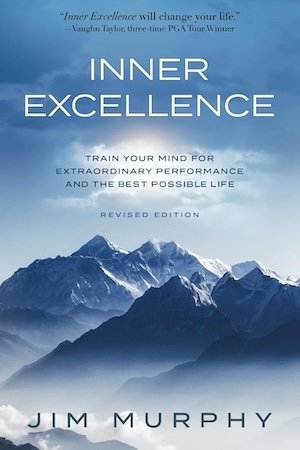
It didn't make a big splash. No bestseller lists. No viral moment. No major press. For sixteen years, it sold quietly—appreciated by those who found it, largely unknown to everyone else.
Then, on a January afternoon in 2025, a camera happened to zoom in on an NFL sideline.
And everything changed.
Within days of A.J. Brown being spotted reading it during a playoff game, Inner Excellence shot to #1 on Amazon. It became a nationwide bestseller. Sales increased by—and this number is not a typo—53,000,000%.
Sixteen years of near-silence. Then one unexpected moment, and the world finally caught up to the work.
Jim Murphy didn't do anything differently. He had simply done the work—carefully, honestly, over a decade prior—and trusted that it had value.
He was right. The world just needed time to find out.
This is worth sitting with.
Because most of us measure the impact of our work in real time. We write the article and watch the clicks. We launch the project and check the response. We put something into the world and wait—impatiently—for the world to confirm it mattered.
But impact doesn't always announce itself on your schedule.
Sometimes your work is quietly sitting on a shelf somewhere, waiting for the right person to pick it up at the right moment—and set off a chain reaction you never could have predicted.
You may never know who reads what you write. Who is shaped by how you lead. Who carries forward something you said in a conversation you've long since forgotten.
Influence doesn't always earn applause.
Sometimes it's just a camera zooming in at exactly the right moment—sixteen years later.
So keep doing the work. Do it well. Do it with intention.
Your moment of recognition may simply be running on a different timeline than you expected.
BEFORE YOU GO
The waiting room. The sideline. The space between what just happened and what comes next.
These aren't gaps in your life.
They're part of it.
You don't need more hours in the day. You might just need a different relationship with the ones you're already standing in.
Just steal the moments.
The in-between isn't empty.
It's available.
Stay inspired by the life you're living.
Kevin
Mar 26, 2026 — Just Beyond the Spotlight
What if the most meaningful parts of your life aren’t the ones everyone applauds?
From an unexpected moment at a concert to the hidden significance of an ordinary day, this issue explores why the moments we almost miss often matter the most—and how noticing them can change everything.
Take Two
No one should settle for a half-lived life.
WORDS TO WONDER
“There are always flowers for those who want to see them.”
— Henri Matisse, French Artist (1869–1954)
PERSPECTIVES TO PONDER
Life is full of center stage moments.
The obvious. The loud. The things designed to capture our attention.
They demand our focus—pulling our eyes toward what’s highlighted, amplified, and expected.
But sometimes, the most remarkable moments aren’t happening under the spotlight.
They’re unfolding just beyond it.
Years ago, I attended a concert by Billy Joel. He was, as you’d expect, incredible. Hit after hit. A lifetime of music filling the room.
But what I remember most didn’t come from center stage.
It came from the edge.
One of the band members—a woman named Crystal Taliefero—sang backup, played the saxophone, and moved effortlessly between instruments. At one point, she was playing the tambourine, dancing in rhythm with the music, completely in sync with the moment.
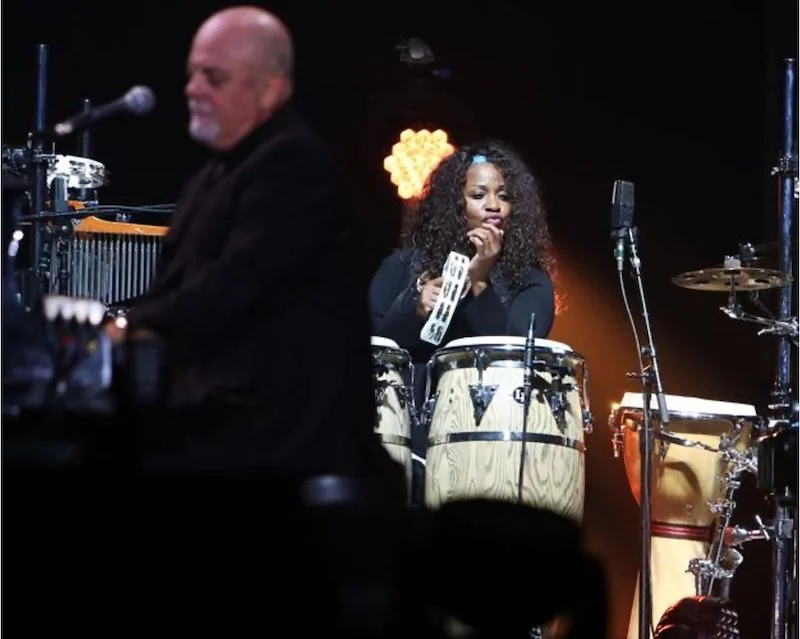
Crystal Taliefero with Billy Joel
And then it happened.
She clipped her microphone with the tambourine.
The mic popped loose from the stand and began to fall.
I braced for the thud when the microphone would hit the ground.
But instead—without breaking rhythm, without missing a beat—she pivoted, caught the microphone between her knees mid-fall, steadied it, returned it to the stand… and kept playing like nothing had happened.
It was seamless. Almost invisible.
I remember thinking: Did anyone else just see that?
The crowd kept cheering. The music carried on. The moment passed.
But it stayed with me.
Because it reminded me of something we often forget:
Life isn’t just made up of the big, obvious highlights.
It’s made up of small, unscripted moments—moments that reward presence, awareness, and a willingness to notice what others overlook.
There are flowers everywhere.
Moments of beauty. Skill. Humanity. Surprise.
Most people miss them.
Not because they aren’t there…
…but because they aren’t looking.
Most of what makes life memorable doesn’t announce itself.
It happens quietly.
Just beyond the spotlight—waiting for those who choose to see.
THIS DAY IN HISTORY—MARCH 26
I’ve always loved history.
With only 365 days in a year, it means something remarkable has happened on every single one.
Today is March 26.
On this day:
Ludwig van Beethoven passed away, leaving behind music that still moves the world centuries later
Jonas Salk announced he had successfully developed a vaccine for polio—saving millions of lives
Guns N' Roses signed their first record deal, beginning a journey that would redefine rock music
And it’s also the birthday of:
Diana Ross
Steven Tyler of Aerosmith
Leonard Nimoy
And poet Robert Frost
When they were born, no one knew what they would become.
No one knew the music they would compose, the lives they would save, or the words they would write.
Today, there are extraordinary things happening we know nothing about.
People are being born who will change the world.
And maybe—without realizing it—you’ll do something today that will matter to someone in the future.
What makes a day meaningful is what we choose to do with it.
History isn’t just something we look back on.
It’s something we create—one day at a time.
What will you do today that might change someone’s tomorrow?
THE DAY MY TURTLES BECAME DUCKS
I remember the moment I decided I wasn’t creative.
I was in first grade, staring at a blank sheet of paper, trying to paint a masterpiece… and instead, I ended up painting something else entirely.
What happened next shaped how I saw myself for years.
It’s a simple story—but it raises a powerful question:
Are you living your life… or someone else’s version of it?
Read the full story: The Day My Turtles Became Ducks
BEFORE YOU GO
Life is more than the big, obvious moments.
Some of the best ones happen just beyond the spotlight.
We don’t have to have everything figured out—
but we do need to stay curious.
And don’t forget: every day, including today, holds the potential to become meaningful—if not historic.
Stay inspired by the life you’re living.
Kevin
Mar 12, 2026 — The Woman Who Made Van Gogh Famous
Vincent van Gogh died largely unknown. The world almost missed his genius—until one woman refused to let it disappear. The story of Johanna van Gogh-Bonger reveals a powerful truth about perspective, belief, and the impact we can have when we champion someone else’s gifts.
Take Two
For people who know there’s more to life and don’t want to miss it.
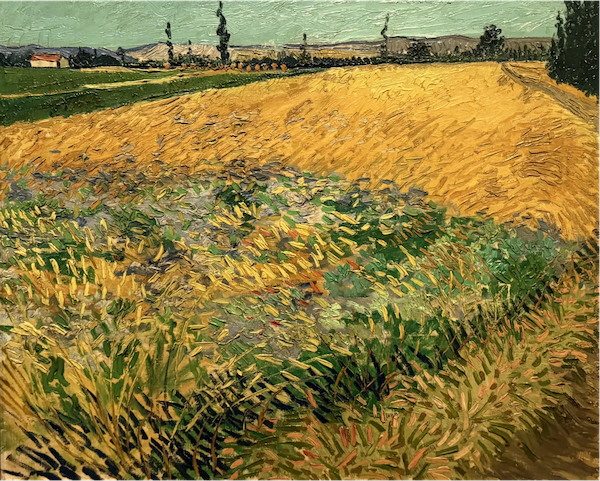
Wheatfield, by Vincent van Gogh
WORDS TO WONDER
“What we do for ourselves dies with us. What we do for others remains and is immortal.”
— Albert Pike, American writer and poet (1809–1891)
PERSPECTIVES TO PONDER
Last week I was in Amsterdam.
And as I always do when I’m there, I spent hours wandering through my favorite museum—the Van Gogh Museum.
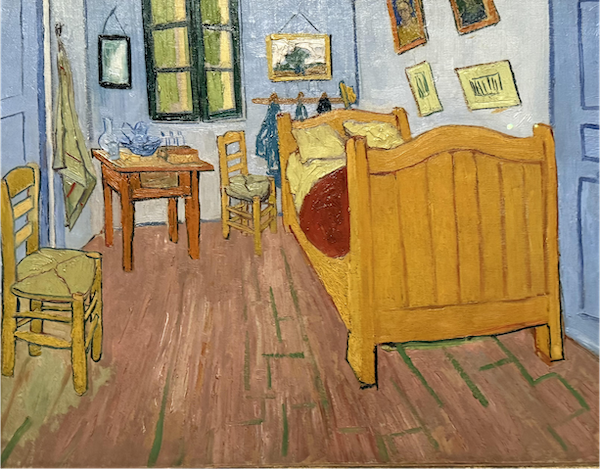
The Bedroom, by Vincent van Gogh
Vincent van Gogh died in 1890, largely unknown. Despite producing more than 2,000 works of art, he had sold only one painting in his lifetime.
His biggest supporter was his brother Theo, who financed Vincent’s work for years.
But six months after Vincent died, Theo died too.
That left Theo’s young widow, Johanna, with hundreds of Vincent’s paintings, drawings, and letters, as well as a baby to raise.
She could have sold everything quickly to support herself.
Instead, she chose a different path.
Johanna believed Vincent’s work mattered.
So she made it her life's work to help the world see it too.
She organized exhibitions across Europe.
She built relationships with critics and dealers.
She carefully released paintings instead of flooding the market.
And she published Vincent’s letters, revealing the passion and struggle behind the art.
Slowly, the world began to notice.
Within a generation, Vincent van Gogh became one of the most celebrated artists in history.
Today millions visit the museum that holds the largest collection of his work.
Standing there, looking at those masterpieces, one thought stayed with me:
Without Johanna, the world might never have known Vincent van Gogh.
We celebrate the genius.
But sometimes the person who changes history is the one who believes in someone else’s genius enough to champion it.
Johanna didn’t paint the masterpieces.
She simply made sure the world could see them.
And it raises a powerful question for all of us:
Whose gift could flourish because you chose to believe in it before the world did?
Sometimes the greatest legacy we leave is the success we help someone else achieve.
QUOTES TO CONSIDER
Two reminders about the power of perspective.
“There are things known and there are things unknown, and in between are the doors of perception.”
— Aldous Huxley (1894–1963)
Many possibilities in our lives are not blocked by reality.
They are blocked by how we see reality.
Sometimes the most important change is not changing our circumstances, but changing our perception.
___
“It is not things themselves that disturb us, but our opinions about them.”
— Epictetus (c. 50–135 AD)
Events themselves rarely define our experience.
Our interpretation of those events often does.
Change the story you tell yourself, and you often change the way life feels.
STEP BACK UNTIL THE PICTURE COMES INTO FOCUS
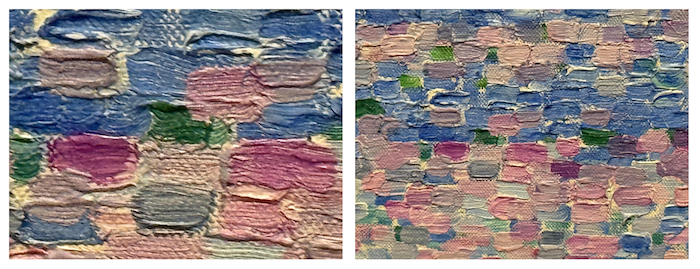
Paul Signac was a French painter known for helping develop pointillism, a style of painting that uses tiny dots of color placed close together so they blend in the viewer’s eye to form an image.
Standing in front of a pointillist painting, the image makes little sense up close.
All you see are scattered dots of color.
But when you step back—with the right distance—the image suddenly comes into focus.
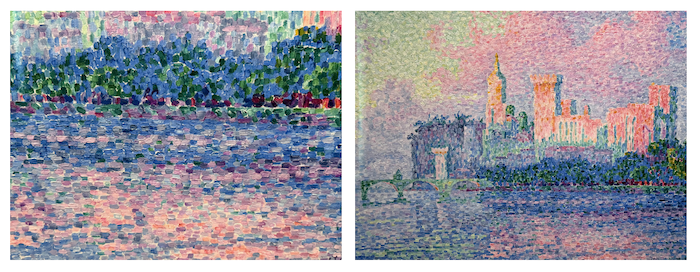
Le Chateau des Papes, Paul Signac
I think pointillism offers a powerful metaphor for life.
Sometimes when we are too close to a situation, we lose perspective. We can’t see the forest for the trees. But when we give ourselves space—when we step back—the chaos begins to make sense.
If life feels confusing or overwhelming right now, you might not need a solution as much as you need distance.
Distance from the noise.
Distance from the pressure.
Distance from the problems crowding your mind.
Create some unscheduled space in your life.
Step back enough for the picture to come into focus.
Because sometimes clarity doesn’t come from pushing harder.
It comes from stepping back far enough to see the whole painting.
And the picture you are painting with your life.
BEFORE YOU GO
This week’s ideas all point to the same truth: perspective shapes everything.
Vincent saw the world differently. Johanna helped the world see it too.
Pointillism reminds us that stepping back often reveals what we couldn’t see up close.
And philosophers from Epictetus to Huxley remind us that how we interpret life shapes how we experience it.
Sometimes the most powerful shift isn’t changing our circumstances.
It’s changing how we see them.
Stay inspired by the life you’re living.
Kevin
Feb 26, 2026 — Nothing Left to Take Away
What if progress isn’t about adding more—but removing what isn’t essential? A reflection on simplicity, creative influence, and why sometimes the strongest structures have space built into them.
Take Two
For people who know there’s more to life and don’t want to miss it.
WORDS TO WONDER
“Perfection is achieved not when there is nothing more to add, but when there is nothing left to take away.”
— Antoine de Saint-Exupéry, French writer and pioneering aviator (1900–1944)
PERSPECTIVES TO PONDER
In the late 1800s, building blocks were exactly what you’d imagine: solid slabs of concrete, each weighing around 100 pounds. Heavy. Dense. Impractical. Strength, at the time, was measured by mass.
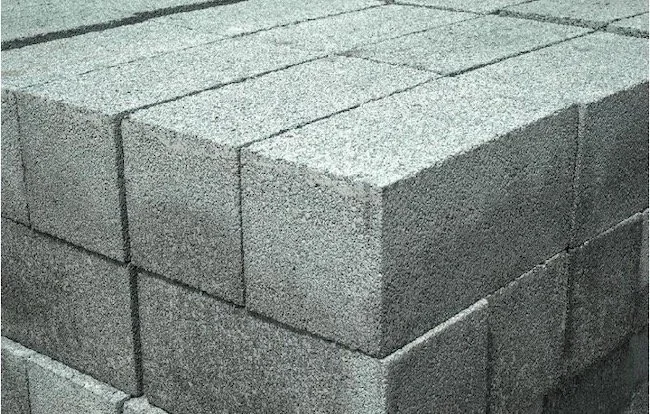
Then along came an inventor named Harmon S. Palmer, who began experimenting with molded concrete blocks. Instead of adding more material, he removed it. He designed hollow cores inside the block — empty spaces that dramatically reduced the weight while maintaining structural integrity.

The result?
A block that was lighter.
Easier to handle.
More efficient.
And in many applications, structurally stronger.
The breakthrough wasn’t in adding more concrete.
It was in knowing what to take away.
Saint-Exupéry understood something similar about design — and about life. Perfection isn’t accumulation. It’s elimination.
We live in a culture that equates progress with addition:
More commitments.
More possessions.
More goals.
More hustle.
We assume strength comes from stacking more weight onto our shoulders.
But what if we’re carrying more weight than we need to?
What you leave out is just as important as what you leave in.
The structure matters more than the mass.
Maybe the reason life feels heavy isn’t because you lack effort — but because you haven’t removed what isn’t essential.
The unnecessary obligation.
The draining relationship.
The endless scrolling.
The outdated expectation.
The belief that busier means better.
When life isn’t working the way you hoped, the answer may not be to add something new. It may be to subtract something old.
Strength doesn’t come from carrying everything.
It comes from building wisely.
And sometimes, the strongest life is the one with space built into it.
WHEN THE PLAN ISN'T THE PROBLEM
You don’t need a better roadmap.
You may need the courage to change the passenger list.
I wrote about why strategy often isn’t the real issue — in business or in life.
Read the full article here.
MORE TO THE STORY — PET SOUNDS
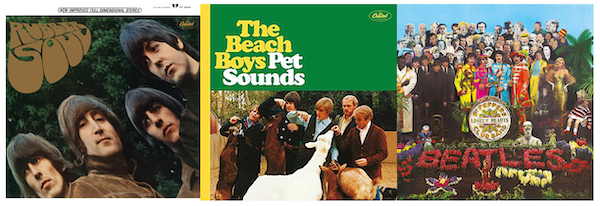
Last week, I told you how Pet Sounds took thirty-four years to be certified gold — a masterpiece the market was slow to understand.
But that wasn’t the whole story.
Before Pet Sounds ever existed, Brian Wilson of The Beach Boys heard Rubber Soul by The Beatles.
And it changed him.
For the first time, he heard a pop album that felt unified — not just a collection of radio hits, but a cohesive artistic statement. It redefined what was possible.
Wilson later said that when he heard Rubber Soul, he thought, I’m going to make an album that’s just as good — maybe even better.
That challenge became fuel.
He stopped touring. He went into the studio. He obsessed over arrangements, harmonies, emotion.
The result was Pet Sounds.
Then the ripple reversed.
When Paul McCartney heard Pet Sounds, he was in awe. He later called “God Only Knows,” one of the album’s standout tracks, the greatest song ever written. The Beatles studied Pet Sounds carefully while working on their next project — the album that would become Sgt. Pepper’s Lonely Hearts Club Band.
Producer George Martin put it bluntly:
“Without Pet Sounds, Sgt. Pepper never would have happened. Pepper was an attempt to equal Pet Sounds.”
And Sgt. Pepper is now regarded as one of the most influential albums ever recorded — a record inspired by an album that initially few appreciated.
Think about that.
An album that felt underappreciated in its own moment helped spark one of the greatest records ever made.
Influence doesn’t always earn applause.
Sometimes it’s the spark in someone else’s mind.
You may never see the full reach of your work.
You may never know who is quietly studying it.
You may never realize who is being challenged to raise their own standard because of what you created.
But thoughtful, intentional effort has a way of multiplying.
So keep creating, regardless of the recognition.
Because your work might be someone else’s Rubber Soul.
And they might turn it into their own Sgt. Pepper.
BEFORE YOU GO
Strength isn’t always about adding more.
Sometimes it’s about carrying less.
Sometimes it’s about choosing who (and what) gets space in your life.
Build with intention.
Subtract with courage.
Trust that even quiet influence matters.
Stay inspired by the life you’re living.
Kevin
P.S.
I recently had a great conversation on the Pivotal People podcast about my latest book, Words to Wonder. We talked about courage and contentment, purpose, and the importance of living intentionally.
If that resonates, you can listen here.