Apr 23, 2026 — The Slow Strangulation of the Mind
Take Two
No one should settle for a half-lived life.
WORDS TO WONDER
“No man is an island, entire of itself; every man is a piece of the continent, a part of the main.”
— John Donne, English poet and cleric (1572–1631)
PERSPECTIVES TO PONDER
Around 10,000 years ago, rising seas filled the Bass Strait and cut Tasmania off from mainland Australia.
What followed is one of history's quietest—and most unsettling—lessons.
The Tasmanians didn't just stop progressing.
They regressed.
Over generations, they lost technologies their ancestors had once possessed. Bone tools. Fish hooks. Barbed spears. Warm clothing. Not through war or famine—just slow, steady loss. When the last person who knew a skill died, the skill died with them.
An anthropologist later called it "the slow strangulation of the mind."
Not because the people lacked intelligence. But because they lacked connection.
Contrast that with Tierra del Fuego—an island equally harsh and remote. Those people still developed complex tools and clothing. Why? They had occasional contact with outsiders. As Matt Ridley writes in The Rational Optimist, that was enough. All it took was an occasional incomer to keep technology from regressing.
Occasional contact. That's all it took.
Now fast forward to today.
We've never been more connected—and yet many of us are quietly isolating ourselves. Not geographically, but mentally, socially, intellectually.
We curate our lives until we're surrounded by people who think like us, agree with us, and reinforce what we already believe.
It feels like community. But sometimes, it functions like Tasmania.
Because growth doesn't come from sameness. It comes from exposure. From friction. From conversations that stretch us. When we stop encountering difference, we don't stay the same—we slowly simplify. Our thinking narrows. Our curiosity fades.
The Tasmanians didn't know they were losing anything. Each generation inherited a slightly smaller world, and it felt completely normal.
That's how regression works. Quietly.
So here's something worth asking:
Where have you isolated yourself?
Maybe physically. Maybe intellectually—only consuming ideas that confirm what you already think. Maybe relationally—staying where it's comfortable instead of where it's stretching.
The people who keep growing aren't always the smartest. They're the most connected. They stay open, curious, and in conversation with the world beyond themselves.
The mind that stays connected keeps growing.
The one that closes off...regresses.
THE COST OF INHERITED COMFORT
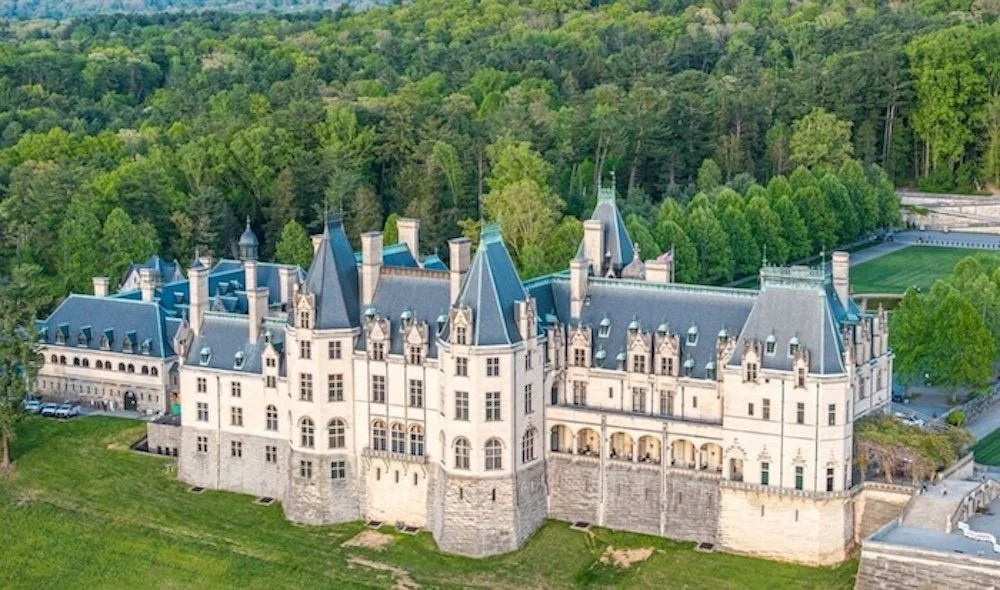
The Biltmore Estate
On our quest to visit all 50 states, my family and I found ourselves in North Carolina last week—walking through the halls of the Biltmore Estate in Asheville, the largest private residence ever built in the United States.
It’s breathtaking.
Room after room of craftsmanship, scale, and excess—built by George Vanderbilt, heir to one of the greatest fortunes in American history.
At one point, the Vanderbilt name was synonymous with wealth. Cornelius Vanderbilt built a fortune so vast it seemed impossible to lose. His descendants would be set for life. And then some.
But there was a philosophy attached to that wealth.
It wasn’t just to have it. It was to show it.
To live lavishly. To signal status. To play the part of being extraordinarily rich.
And for a time, they did.
But by 1973, when the family gathered for a reunion, there wasn't a single millionaire among them.
Not through a single collapse—but through a pattern.
Spending without building. Display without discipline. Comfort without contribution.
It’s easy to look at a story like this and think it’s about money.
It’s not.
It’s about what happens when we stop producing—when we treat what we’ve been given as something to live off instead of something to build from.
We all inherit something.
Opportunity. Skills. Relationships. A reputation earned over years.
And like the Vanderbilts, we have a choice.
The danger of comfort is that it quietly convinces us we no longer need to strive. That what we have is enough to carry us forward.
But what we don’t actively tend, we slowly lose.
The Vanderbilt fortune didn’t disappear overnight.
It faded.
Gradually.
Almost imperceptibly.
Until what once seemed endless… had simply slipped away.
Comfort is a destination. The Vanderbilts got there.
BEFORE YOU GO
Two very different stories this week. One from 10,000 years ago. One from last week. Same lesson.
The Tasmanians lost what they had through isolation. The Vanderbilts lost what they had through comfort.
The question for the rest of us is the same:
What are we doing with what we’ve been given?
Growth has never been accidental. It requires contact, intention, and a willingness to be stretched.
This week—choose one, and lean in.
Stay inspired by the life you're living.
Kevin