Mar 12, 2026 — The Woman Who Made Van Gogh Famous
Take Two
For people who know there’s more to life and don’t want to miss it.
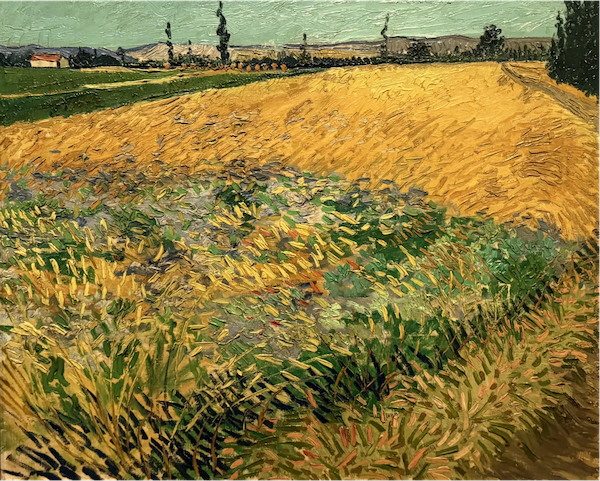
Wheatfield, by Vincent van Gogh
WORDS TO WONDER
“What we do for ourselves dies with us. What we do for others remains and is immortal.”
— Albert Pike, American writer and poet (1809–1891)
PERSPECTIVES TO PONDER
Last week I was in Amsterdam.
And as I always do when I’m there, I spent hours wandering through my favorite museum—the Van Gogh Museum.
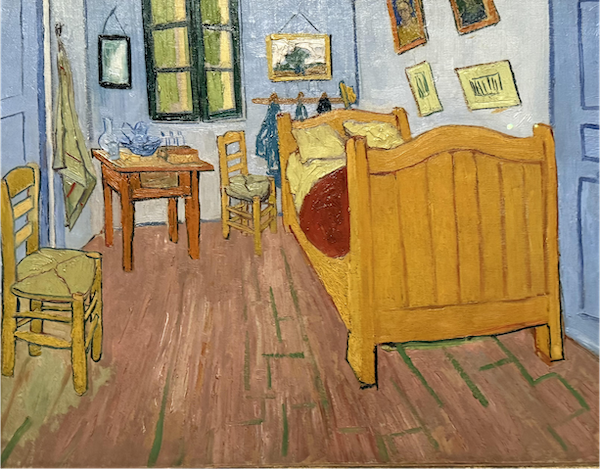
The Bedroom, by Vincent van Gogh
Vincent van Gogh died in 1890, largely unknown. Despite producing more than 2,000 works of art, he had sold only one painting in his lifetime.
His biggest supporter was his brother Theo, who financed Vincent’s work for years.
But six months after Vincent died, Theo died too.
That left Theo’s young widow, Johanna, with hundreds of Vincent’s paintings, drawings, and letters, as well as a baby to raise.
She could have sold everything quickly to support herself.
Instead, she chose a different path.
Johanna believed Vincent’s work mattered.
So she made it her life's work to help the world see it too.
She organized exhibitions across Europe.
She built relationships with critics and dealers.
She carefully released paintings instead of flooding the market.
And she published Vincent’s letters, revealing the passion and struggle behind the art.
Slowly, the world began to notice.
Within a generation, Vincent van Gogh became one of the most celebrated artists in history.
Today millions visit the museum that holds the largest collection of his work.
Standing there, looking at those masterpieces, one thought stayed with me:
Without Johanna, the world might never have known Vincent van Gogh.
We celebrate the genius.
But sometimes the person who changes history is the one who believes in someone else’s genius enough to champion it.
Johanna didn’t paint the masterpieces.
She simply made sure the world could see them.
And it raises a powerful question for all of us:
Whose gift could flourish because you chose to believe in it before the world did?
Sometimes the greatest legacy we leave is the success we help someone else achieve.
QUOTES TO CONSIDER
Two reminders about the power of perspective.
“There are things known and there are things unknown, and in between are the doors of perception.”
— Aldous Huxley (1894–1963)
Many possibilities in our lives are not blocked by reality.
They are blocked by how we see reality.
Sometimes the most important change is not changing our circumstances, but changing our perception.
___
“It is not things themselves that disturb us, but our opinions about them.”
— Epictetus (c. 50–135 AD)
Events themselves rarely define our experience.
Our interpretation of those events often does.
Change the story you tell yourself, and you often change the way life feels.
STEP BACK UNTIL THE PICTURE COMES INTO FOCUS
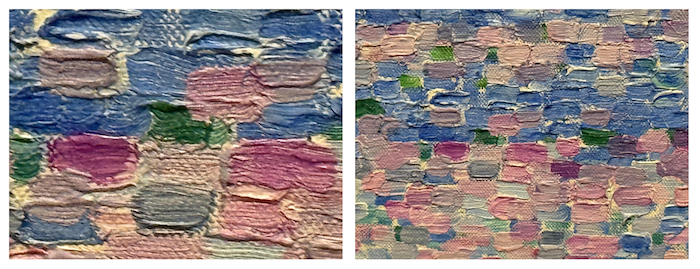
Paul Signac was a French painter known for helping develop pointillism, a style of painting that uses tiny dots of color placed close together so they blend in the viewer’s eye to form an image.
Standing in front of a pointillist painting, the image makes little sense up close.
All you see are scattered dots of color.
But when you step back—with the right distance—the image suddenly comes into focus.
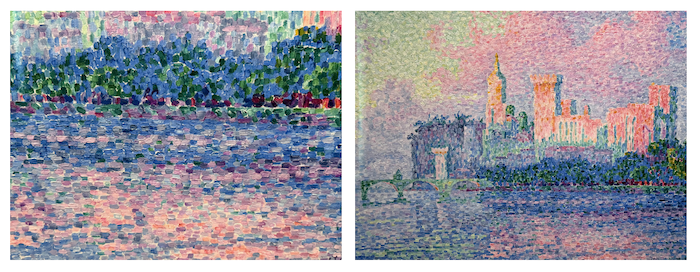
Le Chateau des Papes, Paul Signac
I think pointillism offers a powerful metaphor for life.
Sometimes when we are too close to a situation, we lose perspective. We can’t see the forest for the trees. But when we give ourselves space—when we step back—the chaos begins to make sense.
If life feels confusing or overwhelming right now, you might not need a solution as much as you need distance.
Distance from the noise.
Distance from the pressure.
Distance from the problems crowding your mind.
Create some unscheduled space in your life.
Step back enough for the picture to come into focus.
Because sometimes clarity doesn’t come from pushing harder.
It comes from stepping back far enough to see the whole painting.
And the picture you are painting with your life.
BEFORE YOU GO
This week’s ideas all point to the same truth: perspective shapes everything.
Vincent saw the world differently. Johanna helped the world see it too.
Pointillism reminds us that stepping back often reveals what we couldn’t see up close.
And philosophers from Epictetus to Huxley remind us that how we interpret life shapes how we experience it.
Sometimes the most powerful shift isn’t changing our circumstances.
It’s changing how we see them.
Stay inspired by the life you’re living.
Kevin