Newsletter Archives
May 7, 2026 — 18 Lessons from 18 Extra Years
Eighteen years ago, a liver transplant saved my life. Fewer than half of recipients make it this far. Here are the lessons that hit me hardest — on time, perspective, and what it means to live intentionally.
Take Two
No one should settle for a half-lived life.
This week, I celebrated a milestone I don't take lightly.
Eighteen years ago, I received a liver transplant that saved my life.
Fewer than half of transplant recipients make it this far. That reality is never far from my mind. Every day feels like borrowed time—and a gift.
Over these years, I've watched my kids grow up. I've shared life with Vicky, traveled across the country and around the world, collected wonderful experiences, and formed friendships with thoughtful, remarkable people.
But more than anything, I've paid attention.
Because when you know life is fragile, you stop assuming you have time—and start paying attention to the time you actually have.
Looking back, I wrote down 18 lessons—one for each extra year I've been given. Here are the ones that hit me hardest.
Perspective must be chosen daily. I thought surviving would permanently change how I saw the world. It didn't. The first time I got back behind the wheel in traffic, I realized perspective doesn't stick—it fades. You don't get to live off yesterday's gratitude. You have to choose it again, every morning.
Time is life in disguise. It's easy to lose hours to screens and distraction. But those hours aren't neutral—they are your life. As Bruce Lee said: "If you love life, don't waste time, for time is what life is made of."
Think about death. It might be the most life-giving thing you do. Most people avoid the subject entirely. I think about it every day. Not morbidly, but mindfully—aware that I'm living in extra innings, and that I don't know how many I have left. That awareness makes me intentional.
My health history draws me there, but honestly? None of us is promised tomorrow. We're all in overtime—most people just don't choose to think about it.
What would change for you if you actually believed that?
There are 15 more lessons in the full article—on relationships, regret, kindness, worry, and why the simple moments are often the richest ones.
I end most days with a question from Mary Oliver: "Tell me, what is it you plan to do with your one wild and precious life?"
Eighteen extra years have taught me one thing above all else: life is not something to manage. It's something to live—intentionally and fully and beautifully.
Make it a masterpiece.
IDEAS WORTH THINKING ABOUT
On average, we hear around 30,000 words a day. That's roughly 11 million words a year.
Of the millions of words that washed over you last year, which ones do you actually remember?
Probably not the neutral ones.
Research in behavioral economics has long established that negative experiences hit harder than positive ones of equal size. Daniel Kahneman and Amos Tversky's landmark Prospect Theory put a number on it: the pain of a loss is psychologically about twice as powerful as the pleasure of an equivalent gain. Applied to word—a discouraging remark, a cutting criticism, an offhand insult—we feel the sting roughly twice as deeply as we feel the warmth of a compliment of the same weight. It's why one critical comment can linger for days after a dozen kind ones have already faded.
This isn't weakness. It's wiring.
But here's what that means practically: to simply stay even (emotionally, relationally, mentally) we need to hear approximately twice as many positive words as negative ones just to break even. Most of us aren't anywhere close to that ratio.
If you want to elevate your life—your marriage, your relationships, your mental health—start by elevating the words you hear. Be more intentional about the voices, the content, and the conversations you let in. And be more generous with the words you give to others.
Words aren't just words. At scale, they shape who we become.
THE EXTRAORDINARY LIFE LIBRARY
The Extraordinary Life Life Library is a section of my website where I highlight books that have shaped my thinking—on purpose, personal development, money, and living well. Several of the book recommendations include my top 10 takeaways and excerpts.
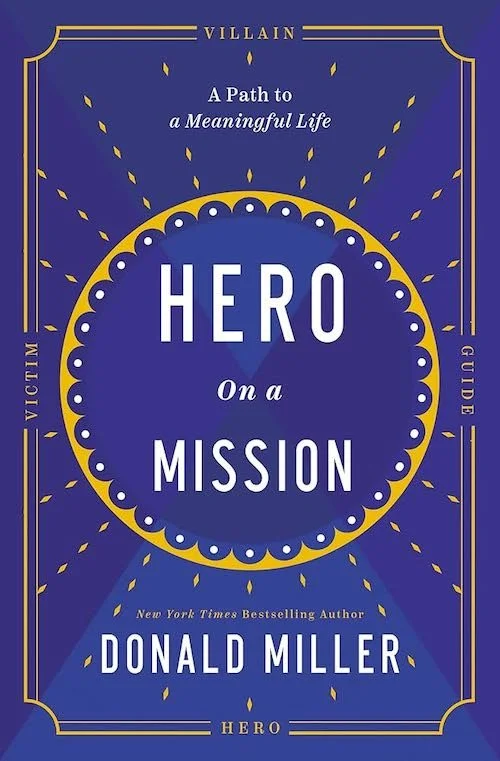
A book full of great insights and reminders is Hero on a Mission by Donald Miller.
BEFORE YOU GO
Three ideas in this week's newsletter—and at their core, they share a common idea.
The words we let in shape how we see the world. The books we read shape how we think about it. And the way we spend our days—our time, our attention, our conversations—shapes the life we actually live.
Eighteen years of borrowed time has taught me that none of it is accidental. The people who live well aren't just lucky. They're intentional.
I hope something this week gave you a reason to pause, to notice, or to choose a little more deliberately.
Stay inspired by the life you're living.
Kevin
Feb 26, 2026 — Nothing Left to Take Away
What if progress isn’t about adding more—but removing what isn’t essential? A reflection on simplicity, creative influence, and why sometimes the strongest structures have space built into them.
Take Two
For people who know there’s more to life and don’t want to miss it.
WORDS TO WONDER
“Perfection is achieved not when there is nothing more to add, but when there is nothing left to take away.”
— Antoine de Saint-Exupéry, French writer and pioneering aviator (1900–1944)
PERSPECTIVES TO PONDER
In the late 1800s, building blocks were exactly what you’d imagine: solid slabs of concrete, each weighing around 100 pounds. Heavy. Dense. Impractical. Strength, at the time, was measured by mass.
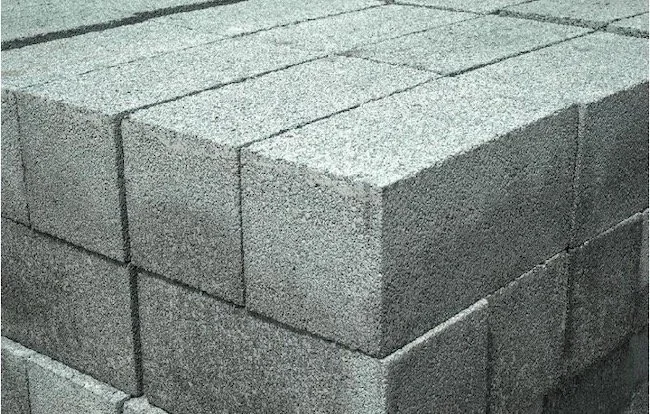
Then along came an inventor named Harmon S. Palmer, who began experimenting with molded concrete blocks. Instead of adding more material, he removed it. He designed hollow cores inside the block — empty spaces that dramatically reduced the weight while maintaining structural integrity.
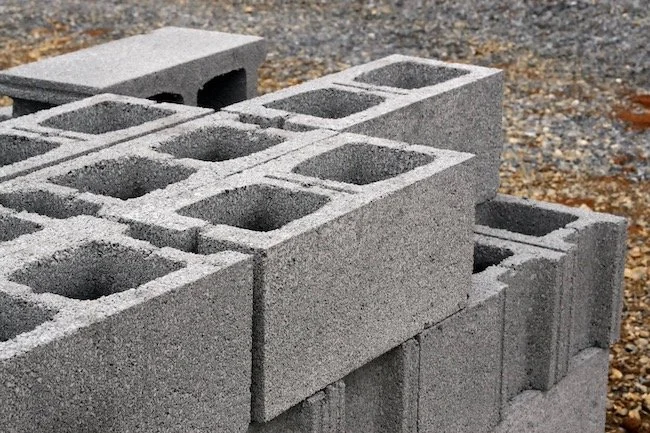
The result?
A block that was lighter.
Easier to handle.
More efficient.
And in many applications, structurally stronger.
The breakthrough wasn’t in adding more concrete.
It was in knowing what to take away.
Saint-Exupéry understood something similar about design — and about life. Perfection isn’t accumulation. It’s elimination.
We live in a culture that equates progress with addition:
More commitments.
More possessions.
More goals.
More hustle.
We assume strength comes from stacking more weight onto our shoulders.
But what if we’re carrying more weight than we need to?
What you leave out is just as important as what you leave in.
The structure matters more than the mass.
Maybe the reason life feels heavy isn’t because you lack effort — but because you haven’t removed what isn’t essential.
The unnecessary obligation.
The draining relationship.
The endless scrolling.
The outdated expectation.
The belief that busier means better.
When life isn’t working the way you hoped, the answer may not be to add something new. It may be to subtract something old.
Strength doesn’t come from carrying everything.
It comes from building wisely.
And sometimes, the strongest life is the one with space built into it.
WHEN THE PLAN ISN'T THE PROBLEM
You don’t need a better roadmap.
You may need the courage to change the passenger list.
I wrote about why strategy often isn’t the real issue — in business or in life.
Read the full article here.
MORE TO THE STORY — PET SOUNDS
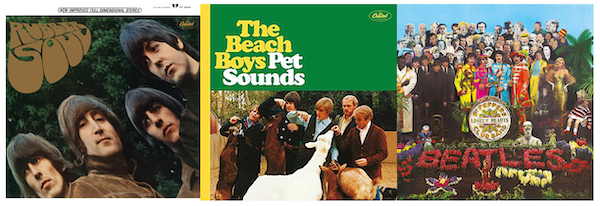
Last week, I told you how Pet Sounds took thirty-four years to be certified gold — a masterpiece the market was slow to understand.
But that wasn’t the whole story.
Before Pet Sounds ever existed, Brian Wilson of The Beach Boys heard Rubber Soul by The Beatles.
And it changed him.
For the first time, he heard a pop album that felt unified — not just a collection of radio hits, but a cohesive artistic statement. It redefined what was possible.
Wilson later said that when he heard Rubber Soul, he thought, I’m going to make an album that’s just as good — maybe even better.
That challenge became fuel.
He stopped touring. He went into the studio. He obsessed over arrangements, harmonies, emotion.
The result was Pet Sounds.
Then the ripple reversed.
When Paul McCartney heard Pet Sounds, he was in awe. He later called “God Only Knows,” one of the album’s standout tracks, the greatest song ever written. The Beatles studied Pet Sounds carefully while working on their next project — the album that would become Sgt. Pepper’s Lonely Hearts Club Band.
Producer George Martin put it bluntly:
“Without Pet Sounds, Sgt. Pepper never would have happened. Pepper was an attempt to equal Pet Sounds.”
And Sgt. Pepper is now regarded as one of the most influential albums ever recorded — a record inspired by an album that initially few appreciated.
Think about that.
An album that felt underappreciated in its own moment helped spark one of the greatest records ever made.
Influence doesn’t always earn applause.
Sometimes it’s the spark in someone else’s mind.
You may never see the full reach of your work.
You may never know who is quietly studying it.
You may never realize who is being challenged to raise their own standard because of what you created.
But thoughtful, intentional effort has a way of multiplying.
So keep creating, regardless of the recognition.
Because your work might be someone else’s Rubber Soul.
And they might turn it into their own Sgt. Pepper.
BEFORE YOU GO
Strength isn’t always about adding more.
Sometimes it’s about carrying less.
Sometimes it’s about choosing who (and what) gets space in your life.
Build with intention.
Subtract with courage.
Trust that even quiet influence matters.
Stay inspired by the life you’re living.
Kevin
P.S.
I recently had a great conversation on the Pivotal People podcast about my latest book, Words to Wonder. We talked about courage and contentment, purpose, and the importance of living intentionally.
If that resonates, you can listen here.
Jan 29, 2026 — Are You Fighting the Laws of Physics?
Newton’s First Law of Motion isn’t just physics—it’s a mirror for how we live. This reflection explores inertia, momentum, and the small forces that quietly shape the direction of our lives.
Take Two
For people who know there’s more to life and don’t want to miss it.
ARE YOU FIGHTING THE LAWS OF PHYSICS?
Isaac Newton’s First Law of Motion—the law of inertia—states:
An object at rest stays at rest, and an object in motion stays in motion, unless acted upon by an external force.

It’s a core principle of physics, but it’s also a quiet truth about how we live.
So it’s worth asking:
Are you at rest?
Not physically, but existentially. Have you lost momentum? Settled into routines that no longer challenge you? Stopped trying not because you chose to, but because it slowly became easier not to?
Or are you in motion?
You may be busy, productive, constantly moving—but motion alone isn’t the goal. Is your movement taking you closer to the life you want to live? Or is it carrying you farther away, just at a faster pace?
Newton reminds us of something important: motion doesn’t change on its own. A life at rest doesn’t suddenly spring forward. A life drifting off course doesn’t magically correct itself.
Change requires a force.
That force might be a decision you’ve been avoiding.
A conversation you need to have.
A habit you need to start (or one you need to stop).
A choice to pursue what matters most.
There are forces acting on you whether you choose them or not. Some energize you. Others quietly slow you down. Paying attention to which ones you allow into your life may matter more than you realize.
The laws of physics are at work every moment of every day. The question is: are you fighting them—or letting them work for you?
QUOTATIONS TO CONSIDER
“It’s not that we need to do more. It’s that we need to do less of what doesn’t matter.”
— Greg McKeown, leadership thinker and author
“You cannot find peace by avoiding life.”
— Virginia Woolf, English writer
“Inspiration is perishable—act on it immediately.”
— Naval Ravikant, entrepreneur and investor
“I was in darkness, but I took three steps and found myself in paradise. The first step was a good thought. The second, a good word; the third, a good deed.”
— Friedrich Nietzsche, German philosopher and writer
THINGS WORTH THINKING ABOUT
Why Indecision Is the Biggest Reason You’re Missing Out
How much life are you missing because you’re waiting to decide? This article explores why indecision is often more damaging than a wrong choice—and how small decisions can restore momentum.
BEFORE YOU GO
This week’s ideas all point in the same direction: momentum matters. Whether it’s physics, perspective, or choice, small decisions shape the direction of our days—and, over time, our lives.
I hope you’re finding meaningful momentum as you pursue what matters most.
Stay inspired by the life you’re living.
Kevin
Jan 2, 2026 — Course Correction, Not Reinvention
A meaningful life isn’t built through dramatic reinvention. It’s shaped by small course corrections—made often—that slowly guide us toward the life we want.
Take Two
For people who know there’s more to life and don’t want to miss it.
COURSE CORRECTION, NOT REINVENTION
We often approach the New Year as if it requires a total overhaul of our lives. New habits. New goals. A new version of ourselves.
But meaningful change rarely happens that way.
Commercial airplanes offer a helpful reminder. After a plane takes off, it's slightly off course for much of the journey. What matters isn’t flawless precision—it’s the constant course corrections made along the way.
Small adjustments. Repeated often. That’s how a plane arrives where it intends to go.
Our lives work much the same way.
Most New Year’s goals fail not because we lack motivation in January, but because we don’t revisit them in February… or April… or October. We set a direction once and hope momentum will carry us the rest of the year. When life inevitably drifts us off course, we don’t notice—or we notice too late.
The alternative is simpler and far more effective.
Instead of asking, How can I reinvent myself this year?
Try asking, What small correction would bring me closer to the life I want to be living right now?
Improve your sleep.
Reduce screen time.
Watch less television and read more books—even a page or two each day.
Give more time and attention to your health, your relationships, your spiritual life.
Course correction doesn’t demand perfection. It requires awareness.
And the good news is this: you don’t have to wait until next January to begin again. You can recalibrate today. Tomorrow. As often as needed.
A meaningful life isn’t built through dramatic resolutions. It’s shaped through small, repeated adjustments.
What small adjustment can you take today that will help you move in the direction of the life you want to live?
THREE QUESTIONS TO CONSIDER
A New Year is an invitation to ask better questions—because the quality of our lives is often shaped more by the questions we ask than the goals we chase. Here are three worth sitting with as you begin the year:
1. Fast forward to December 31, 2026—what one thing would need to have happened for you to feel this was a good, meaningful year?
2. If you knew 2026 would be the last year of your life, how would you live differently than you did last year? What conversations would you want to have?
3. What routines, habits, or time-consuming activities are no longer serving you? Remove one that's not working and replace it with something that will help you create the life you want.
NEVER MISS THE CHANCE TO START AGAIN
A new year doesn’t magically change our lives—but it does offer something precious: the chance to begin again with more wisdom than before. I wrote a short article that explores the value in starting again. You can read it here.
QUOTES TO CONSIDER
Quote #1:
“You do not have to be the same person you were five minutes ago.”
— Alan Watts
Quote #2:
“The truth is each of us are only one or two decisions away from a more beautiful and winsome life.”
— Bob Goff
Quote #3:
“Although no one can go back and make a brand-new start, anyone can start from now and make a brand-new ending.”
— Carl Bard
BEFORE YOU GO
I hope the year ahead is filled with wonderful moments and memories you’ll carry with you for years to come.
Spend some time imagining what this year could bring—but remember, you don’t have to have the whole year figured out. You don’t need a flawless plan or perfect follow-through. You only need a direction, and the willingness to make small course corrections along the way.
If you’re looking for ideas and inspiration for living a more meaningful, purpose-filled year, I invite you to read my first book, A Life Worth Living. I wrote it as a reminder—to myself most of all—to live intentionally and to make the most of my one wild and precious life. I’m reading it again now, because I’ve learned I always need reminding to live the life I’ve imagined.
Stay inspired by the life you’re living.
Kevin
Dec 18, 2025 — Looking Back to Live Better
As the year comes to a close, reflection helps us turn experience into wisdom. In this issue, I explore the value of looking back—on our days, our moments, and the people who shaped them—and share a few reminders found on the streets of New York about beginning again, embracing pressure, and clearing the dust to see what matters most.
Take Two
For people who know there’s more to life and don’t want to miss it.
WORDS TO WONDER
"We do not learn from experience… we learn from reflecting on experience."
— John Dewey, philosopher and psychologist
"We don't remember days; we remember moments."
— Cesare Pavese, poet and novelist
"How we spend our days is, of course, how we spend our lives."
— Annie Dillard, poet and author
PERSPECTIVES TO PONDER
As the year comes to a close, I find it invaluable to pause and reflect on all that has filled it. Reflection has a way of quieting the noise and revealing what truly mattered—and what didn’t.
Looking back helps me notice patterns: whether I’ve been paying attention to what’s good or fixating on what’s wrong; whether I’ve lived reactively or intentionally; whether my days reflect the life I hope to be living. As Annie Dillard reminds us, our lives are simply the sum of our days—and how we choose to spend them matters.
One simple exercise I return to each year is this: set aside 20 or 30 quiet minutes and reflect on your favorite moments—and your least favorite ones. Naming them brings clarity. It becomes easier to schedule more of what energized you and to gently avoid what drained you in the year ahead.
Take time to reflect on the people you spent the most time with. Did those interactions leave you feeling encouraged or depleted? Did certain relationships bring out your best—or your worst? Awareness creates choice. And choice creates change.
As Cesare Pavese observed, we don’t remember days—we remember moments. What were your defining moments of 2025? The places you went. The experiences that stretched you. The challenges that taught you something important. Reflection turns experience into wisdom—and wisdom helps us move forward with greater intention and meaning.
Some people quickly jot down a list of New Year’s resolutions on January 1. Others skip reflection altogether. I prefer a slower approach. I take the entire month of January to reflect, reimagine, and review the systems and goals in my life—asking whether they truly support the way I want to live.
Socrates famously said, “The unexamined life is not worth living.” Reflection doesn’t have to be heavy or burdensome. Think of it as an invitation to relive the moments that made you smile, grow, and feel alive.
One of my favorite ways to begin is simple: scroll back to January in your photo reel and move forward, moment by moment. It’s a powerful reminder of just how much life you lived this year—and a beautiful way to appreciate it all.
I hope reflecting on 2025 brings gratitude for the moments that mattered—and clarity for how you want to live in the year ahead.
THREE REMINDERS FROM THE STREETS OF NYC
When I travel, I try to slow down enough to notice the details—the things you’d miss if you were rushing from one destination to the next. While walking through New York this week, three images caught my eye. Each felt like a reminder worth carrying home.
1. You Can Begin Again
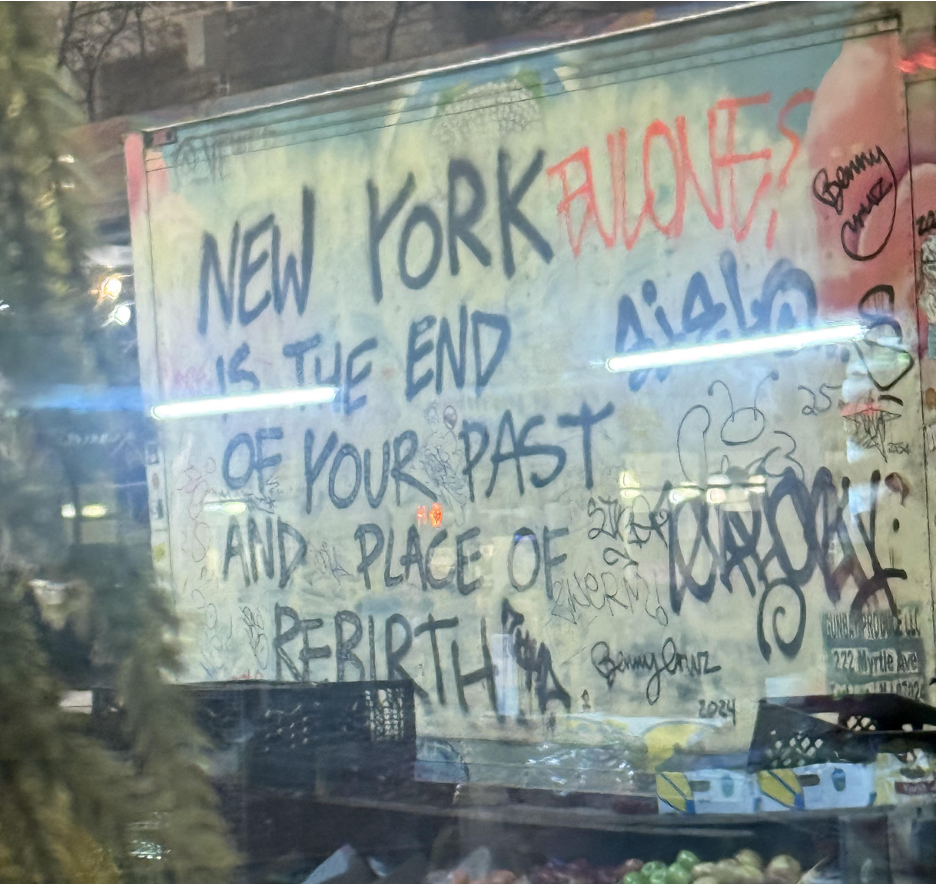
“New York is the end of your past and place of rebirth.”
Many people come to New York to leave something behind and start over. A past version of themselves. A chapter that no longer fits.
The good news? You don’t have to move to New York to do that.
Any day can be a reset. Any moment can be a turning point. Starting fresh isn’t about geography—it’s about choice. We can all leave the past where it belongs and begin again, if we’re willing to decide that today is different.
2. Pressure Is a Privilege
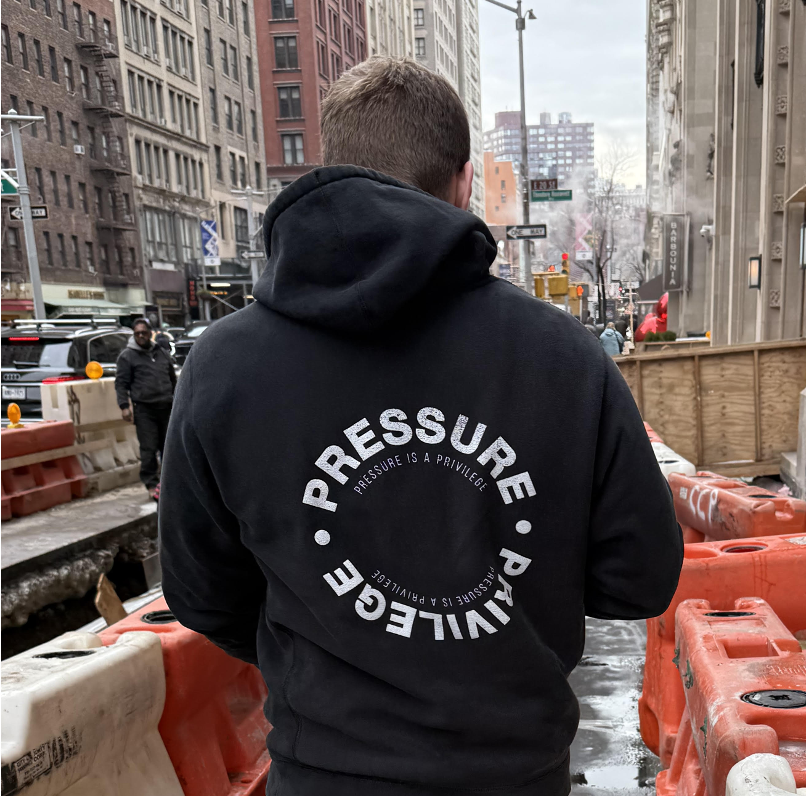
Pressure only exists when something matters.
If no one expects anything of you, if nothing important is at stake, if no one is depending on you—there’s no pressure. But there’s also very little meaning.
Pressure can be uncomfortable, even heavy at times. But it’s also a reminder that you’re in the arena—engaged, responsible, alive—rather than standing safely on the sidelines. The weight you feel is often the cost of doing something that matters.
3. Wash the Dust Away
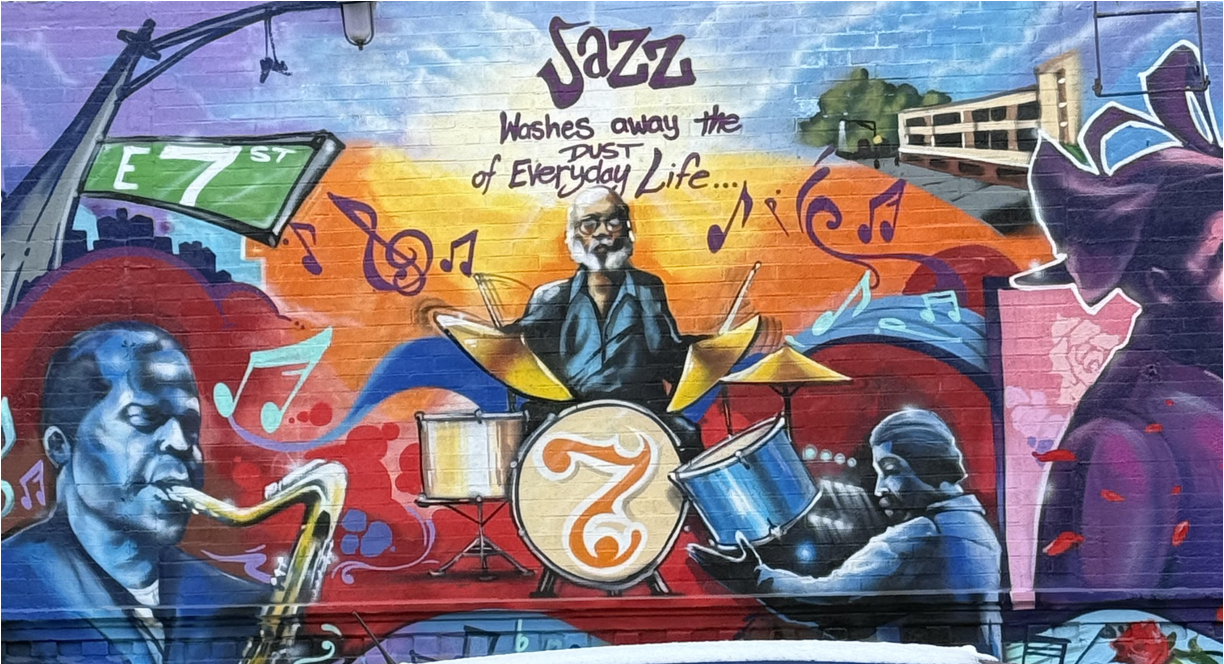
“Jazz washes away the dust of everyday life.”
Life gets messy. Repetition dulls our senses. Routines pile up, and before we know it, the wonder is covered in dust.
Sometimes we need to pause and clear it away.
For some, that might be music. For others, a deep conversation, time in nature, prayer, movement, or quiet solitude. Whatever does it for you, take a few moments to wash the dust away—so you can see clearly again the extraordinary things that are already happening all around you.
BEFORE YOU GO
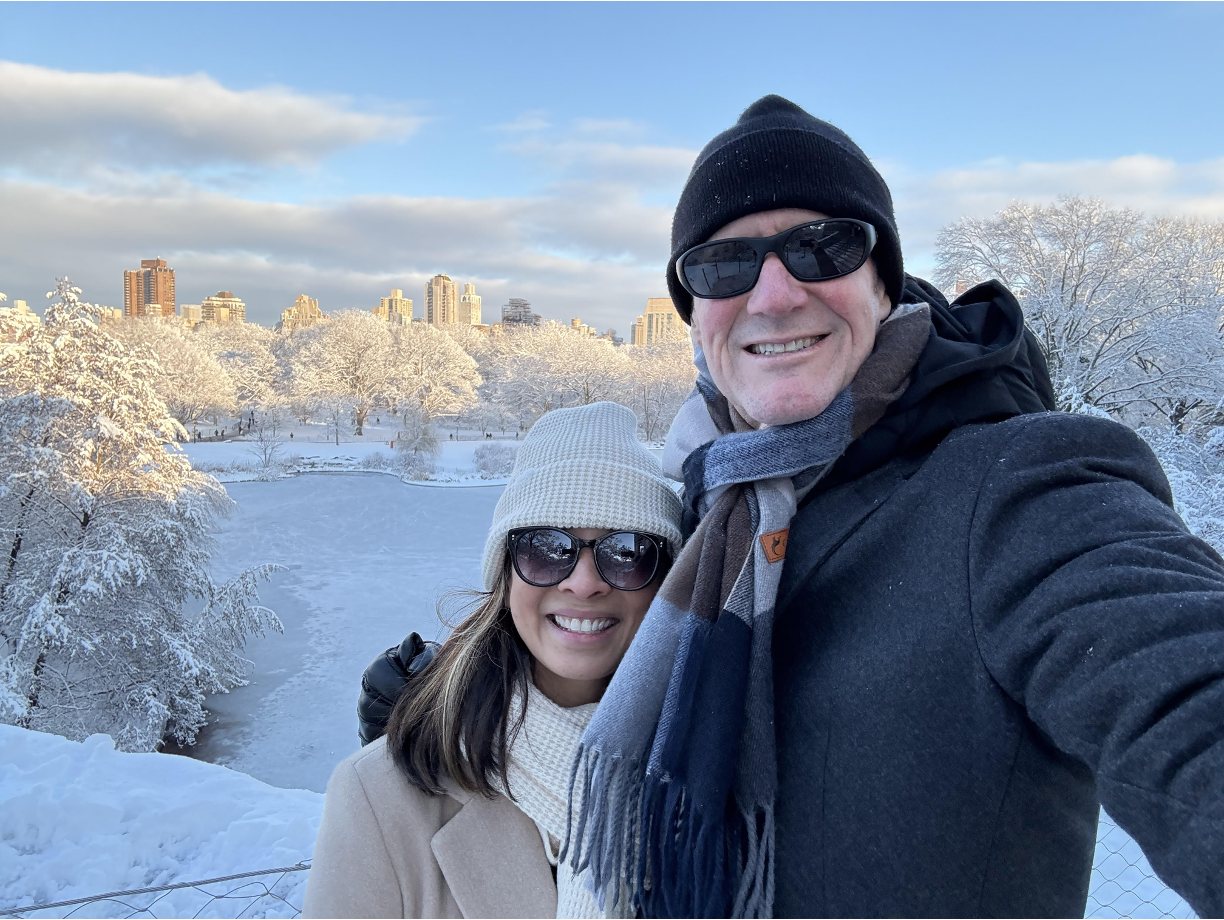
I’ve spent a lot of time in New York. Vicky and I were married in Central Park, and we return every year.
This time, we arrived in fresh snow and 20-degree weather. That single change—snow—made everything feel different. Of all my years visiting New York, this one stood apart. Central Park—so familiar to us—had been transformed into a winter wonderland.
It was a simple but powerful reminder: sometimes one change can transform everything.
As you look ahead to 2026, consider one action—one habit, one decision, one shift in focus—that could quietly change the trajectory of your life. You don’t have to overhaul everything. You don’t need a long list of resolutions.
Sometimes, one intentional change is enough.
Stay inspired by the life you’re living,
Kevin